
Chomps Growth Story: From Side Hustle To Shelf Leader
- Lev Joffe

- Apr 27
- 3 min read
Updated: May 5
Quick Snapshot
Chomps turned a niche DTC meat stick startup into a national protein snacking brand by iterating on channel strategy, consumer fit, and product adjacency (as well as leaning into opportunities when they presented themselves). Their revenue grew from about $400,000 before Trader Joe’s, to about $4 million in 2016, nearly $500 million in 2024 and is now reportedly closing in on close to a $1 billion for full-year 2026.

Variety of Chomps products on the store shelf (photo from Chomps.com)
Company Profile
Company: Chomps
Product: Meat sticks / protein snacks
Category: Better-for-you snacks
Founded: 2012
Headquarters: Chicago
Estimated Revenue: About $500 million in 2024 sales
Major Brands / Portfolio: Beef, turkey, venison, and chicken sticks under the Chomps brand.
The Backstory
Chomps began in 2012 as a side-hustle DTC brand while founders Pete Maldonado and Rashid Ali still held full-time jobs. Pursuing the business part-time allowed them to enter the market and gain valuable consumer insight, but scale was limited. The entry timing was great, though, as the consumer demand for clean-label protein snacks created a significant tailwind.
The real inflection point came in 2016, when Trader Joe's offered to bring Chomps in as a rare branded item. While it was a high-risk move (the brand needed to increase production by nearly 10x to meet new demand!), it gave the brand the visibility and platform for growth that it needed.
The Iteration / Pivot
Chomps iterated on how to scale the brand at every point of its growth.
2012: Launched as a DTC brand. The founders collected competing products and contacted co-manufacturers to find the right fit.
2013: The first product was frozen steak intended to keep fitness clients on healthier meal plans; the company moved into meat sticks to ensure excess trim would not go to waste.
2016: Trader Joe’s approached Chomps about putting the meat stick product on shelves. The founders pushed to keep the product branded, which is rare for Trader Joe’s and helped build significant loyalty.
2016–2018: Chomps focused tightly on one retail partner instead of overexpanding, strengthening supply chain, quality, and repeat velocity in the process.
2019 onward: The brand expanded into the natural channel as awareness grew and the founders developed a better understanding of the retail landscape. It also broadened from core beef into turkey, venison, and later chicken in 2026, after more than a decade of development.
Results
Revenue jumped from about $400,000 before the Trader Joe’s deal to about $4 million in 2016 and continued rapid growth to nearly $500 million in 2024, all while remaining profitable.
By 2025, Chomps said it was sold in 30,000+ stores nationwide.
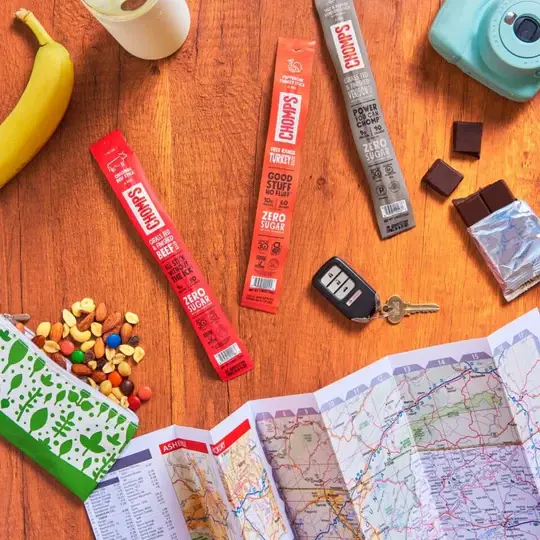
Beef for the road - Chomps markets as a meat forward snack for many occasions (photo from Chomps.com).
Why It Worked
Chomps took an iterative approach to growth, pivoting as needed based on opportunities.
First, DTC gave the founders consumer insight before scale while they kept their day jobs and tested the business with limited risk. It also helped them identify the best product-market fit. For example, meat sticks were first explored as a way to use excess trim from the frozen steak product, before ultimately becoming the breakthrough format.
Second, they prioritized unit economics and profitability early. Combined with a bootstrap financing strategy, that gave them the opportunity to grow at a steady pace.
Third, they kept the brand intact when Trader Joe’s came calling. It’s easy to imagine a private-label route would have been easier in the short-term, but keeping the brand clearly created more long-run value.
Finally, later innovation stayed adjacent to the core promise: clean-label, convenient, protein-forward snacks for everyday routines, versus arbitrarily jumping into wholly new formats and categories in search of breadth that may have ultimately diluted the brand and business.
What CPG Innovation Teams Can Learn
✅ Use early channels as learning labs and look for best product market fit.
✅ Expand distribution only after proving repeat, velocity, and operational readiness.
✅ Intentionally extend from the core promise into adjacent proteins or occasions.
Sources
https://mastersofscale.com/how-to-sell-a-billion-dollars-of-snacks/
https://www.bain.com/insights/insurgent-qa-chomps-cofounder-rashid-ali/
https://www.fooddive.com/news/chomps-meat-sticks-twizzlers-dirty-soda-surfside-superlyte/814659/
https://www.builtinchicago.org/job/associate-social-community/7752863
Follow the Series
This article is part of Innovation by Design, a series from Horizon X and Integral CPG exploring how intentionally iterative design drives successful food and beverage innovations. Follow for more case studies on the strategies shaping modern food product growth.
#CPGInnovation #FoodInnovation #ProductInnovation #BrandStrategy #ConsumerInsights #ProteinSnacking #InnovationByDesign



Comments